AI Strategy · PubMatic · 2025
How I gave a fragmented org
a shared direction on AI
PubMatic is a publicly-traded adtech platform processing hundreds of millions of ad impressions daily. Its users are ad ops professionals at major publishers, configuring deals and troubleshooting advertising bid traffic where misconfigurations cost real revenue.
In 2025, every team had an AI ask on the roadmap. Budget was moving, engineers were building. Customers thought it was cool. Whether they'd actually use it was another question.
Every team was building AI independently. No shared patterns, no shared vision, no agreed-on interaction model. In adtech, where trust is the product, a fragmented AI experience erodes the thing customers are paying for.
I pitched and led a two-part design sprint that aligned the design team on AI fundamentals, converged on a unified vision for an AI assistant, and extended that vision into the PM organization before anything got built.
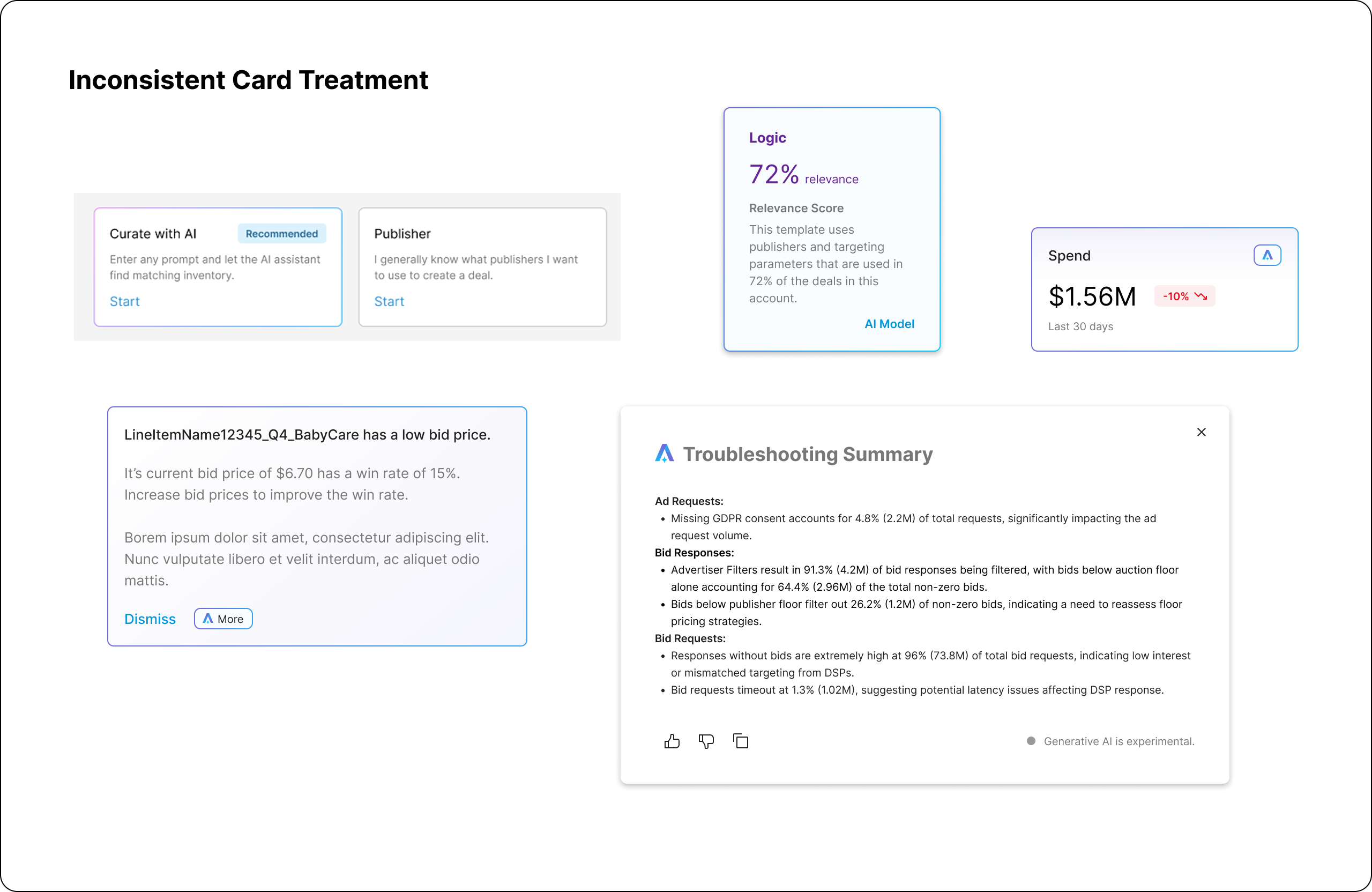
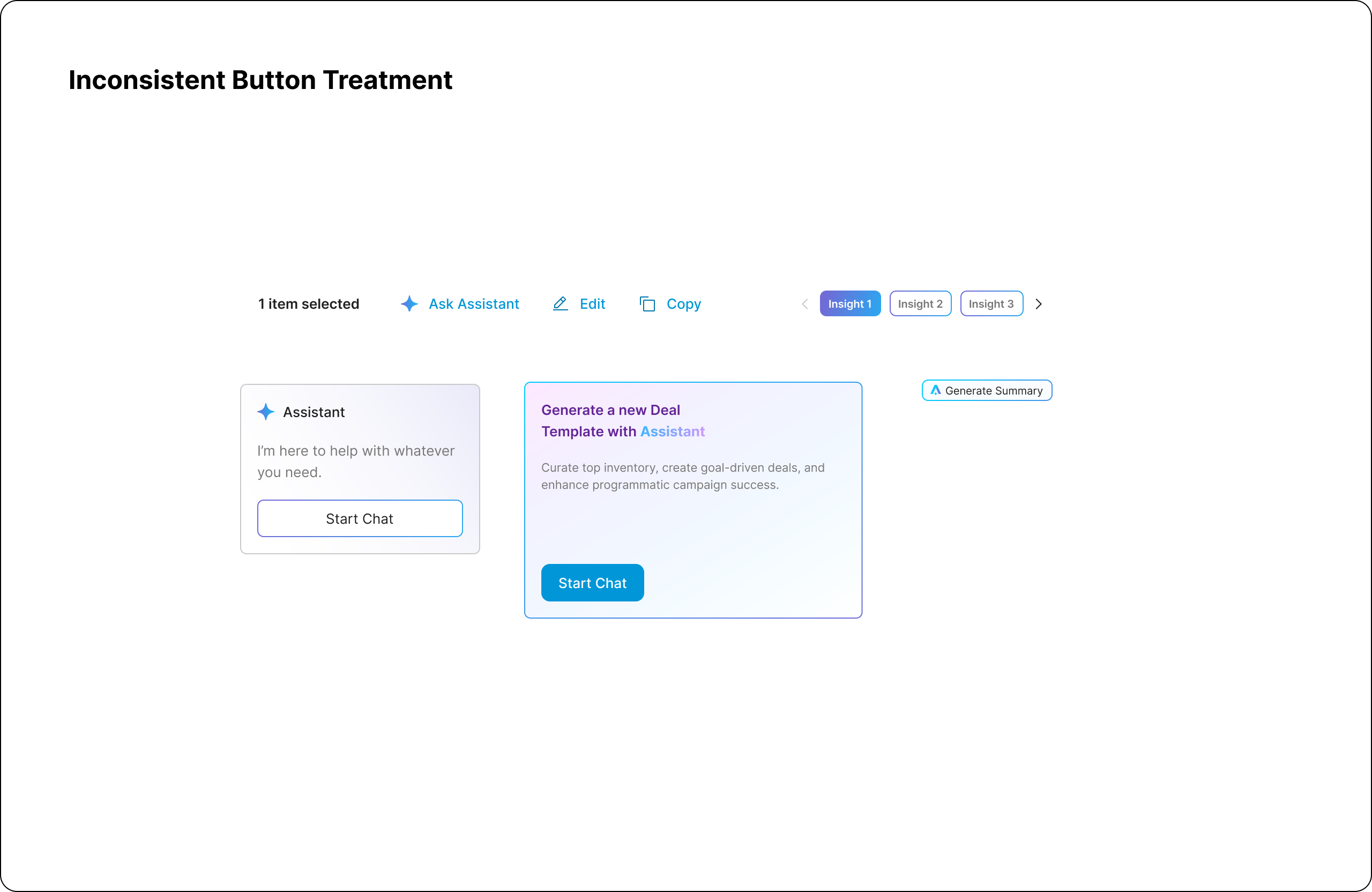
The sprint had three phases. Each one answered a different question.
Phase 1: What does trustworthy AI actually look like for our users?
I brought in outside voices — speakers from Anthropic, Patreon, and a design consultancy — to pressure-test our assumptions. The question we kept returning to: how do you design an AI experience users will actually rely on when something goes wrong? We made it the lens every subsequent decision got filtered through.


Alongside the trust work, every designer tried 2–3 new AI tools (Figma Make, v0, and others), built prototypes, and shared what they learned. The tool exploration was how we built the AI intuition the trust question required. It also turned a siloed team into one that could do vision work together.





Phase 2: What should the AI experience be?
This was the blue sky vision of what our AI center could be - where the users can view their stats, learn about their usage and impact, and have agentic workflows integrated into their platform.
Phase 2 produced three interaction patterns, each for a distinct user intent: in-context (the assistant surfaces help where the user already is), chatbot (the assistant handles open-ended conversation), and a universal command surface (the assistant acts across the platform via keyboard shortcut). Above the three sat a single anchoring principle: the assistant should know where the user is and adapt. That became the shared vocabulary the design org uses to talk about AI interaction.
Phase 3: Would the rest of the org actually utilize this?
A vision that lives inside the design team isn't a vision. I extended the sprint into a PM workshop, not to present the designs, but to stress-test them with the people who'd have to build and sell them. I built prototypes around six interaction questions: whether change initiated by AI should live inline or in a dedicated surface, how important is the concept of "context", how customizable should the chatbot window should be, and how to signal when AI had acted versus suggested. What came back wasn't sign-off. It was a shared vocabulary, and a prioritized list that became the December release.
Workshop artifacts were the easy part. The key decisions were the work.
Decision 1: Three entry points for AI products, not one.
The path of least resistance was for every team to default to "put it in the chatbot" and call it done. I argued for three interaction patterns instead, each mapped to a distinct user intent. The reasoning: the real failure mode wasn't picking the wrong pattern. It was picking any pattern without knowing the user's context.

The three-pattern framework is now how the design org talks about AI interaction. When deal recommendation came up, the PM and I were debating which pattern fit, not whether to default to chatbot. We didn't fully align (I advocated hybrid, it started as chatbot), but the fact that the debate was happening at all was new. Before the sprint, the question didn't exist.
Decision 2: Extending the sprint into the PM org.
I could have delivered the vision to my own director and called the work done. Instead, I took it to the September PM offsite specifically to surface disagreements before they became roadmap problems. The reasoning: a vision the PM org hadn't agreed to was a vision that wouldn't survive the first roadmap planning meeting.
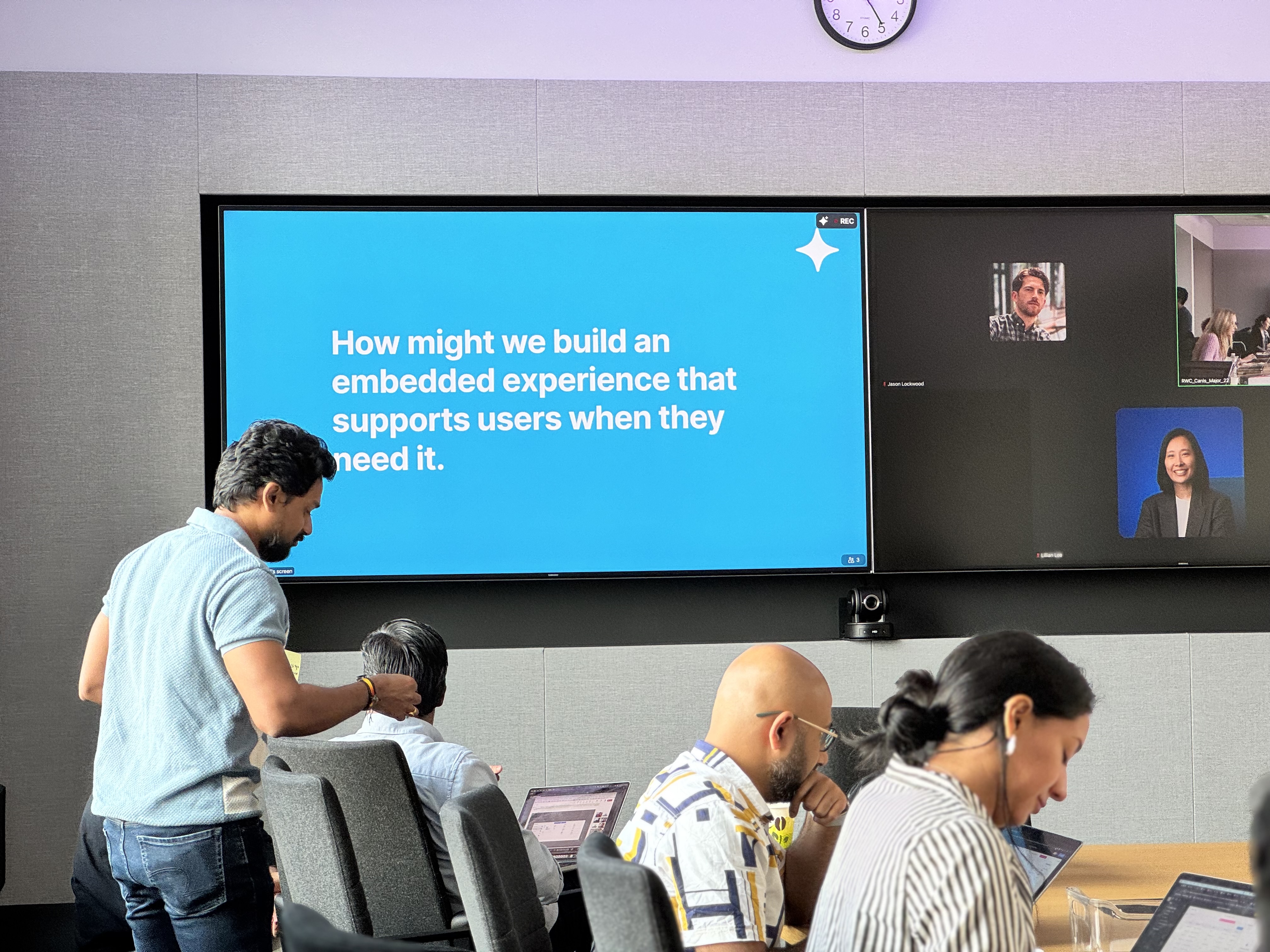

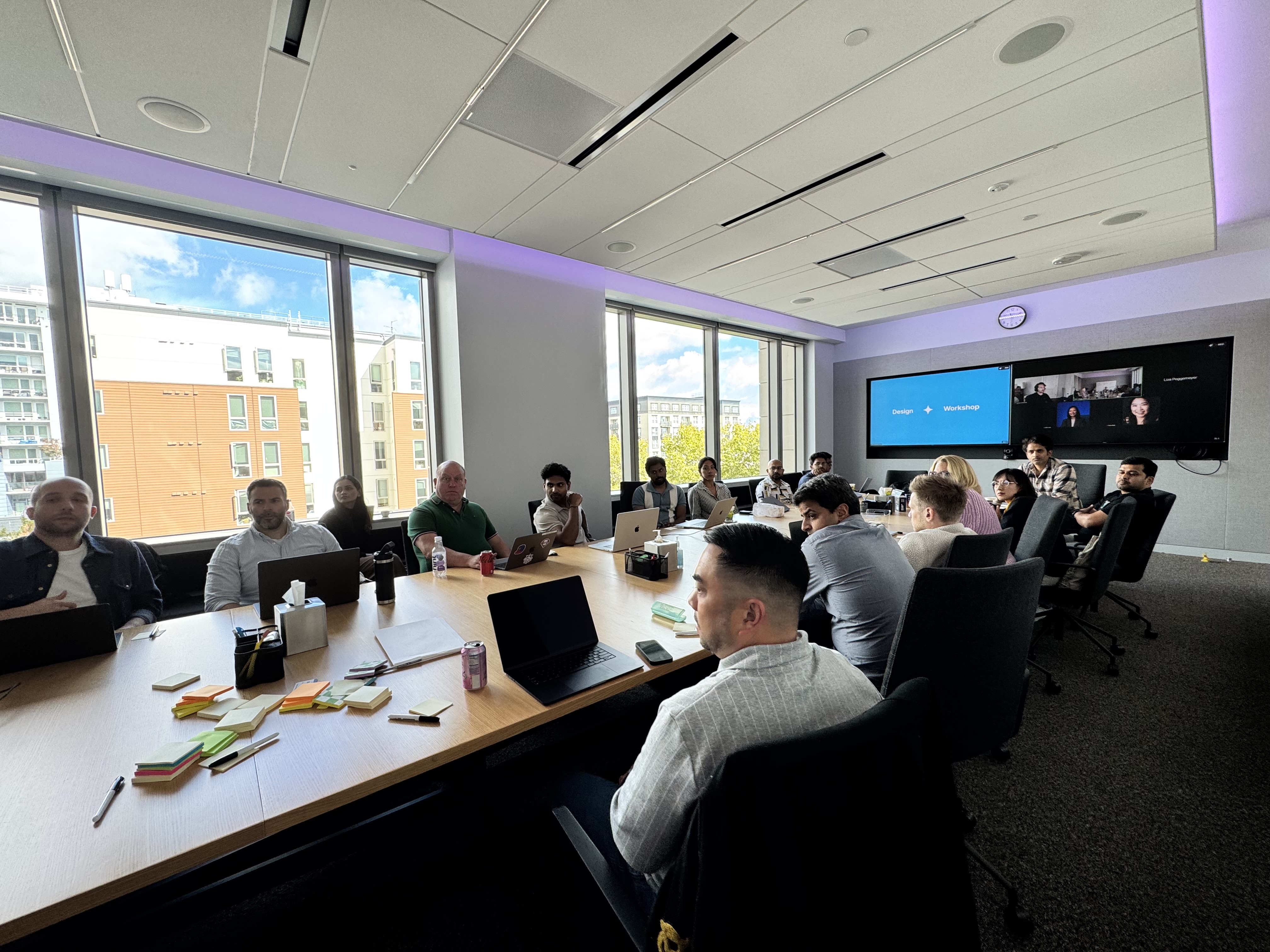
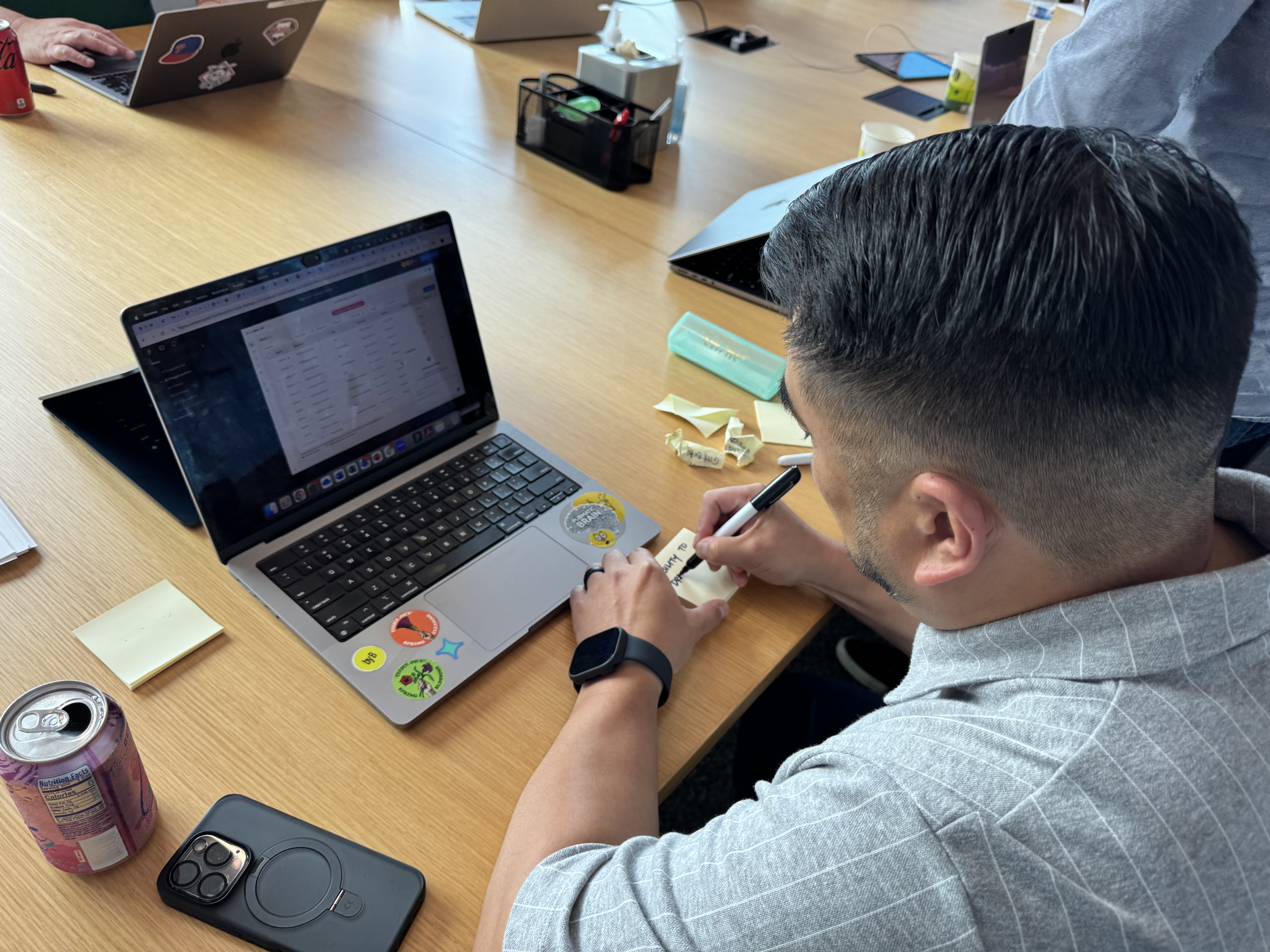
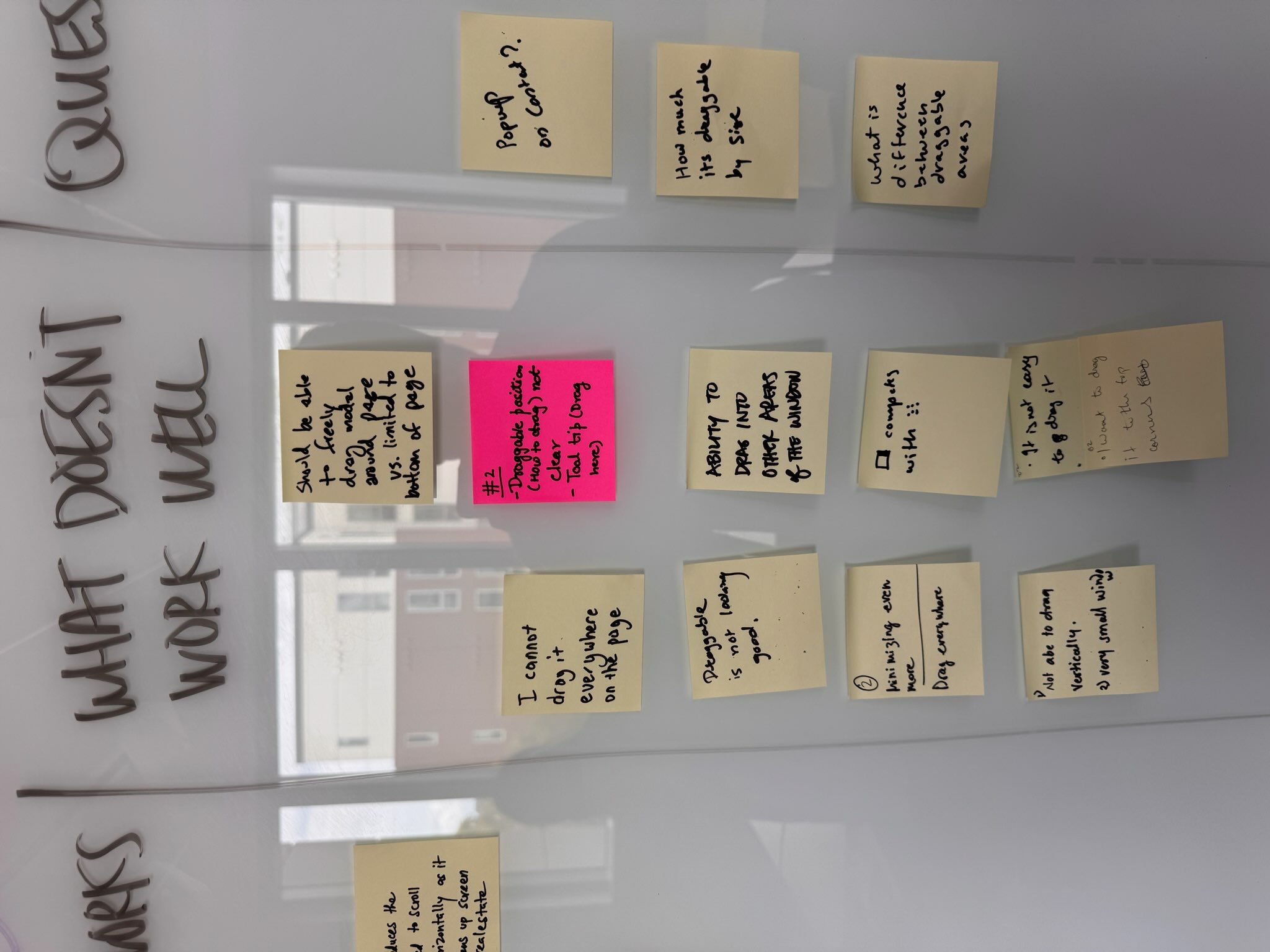
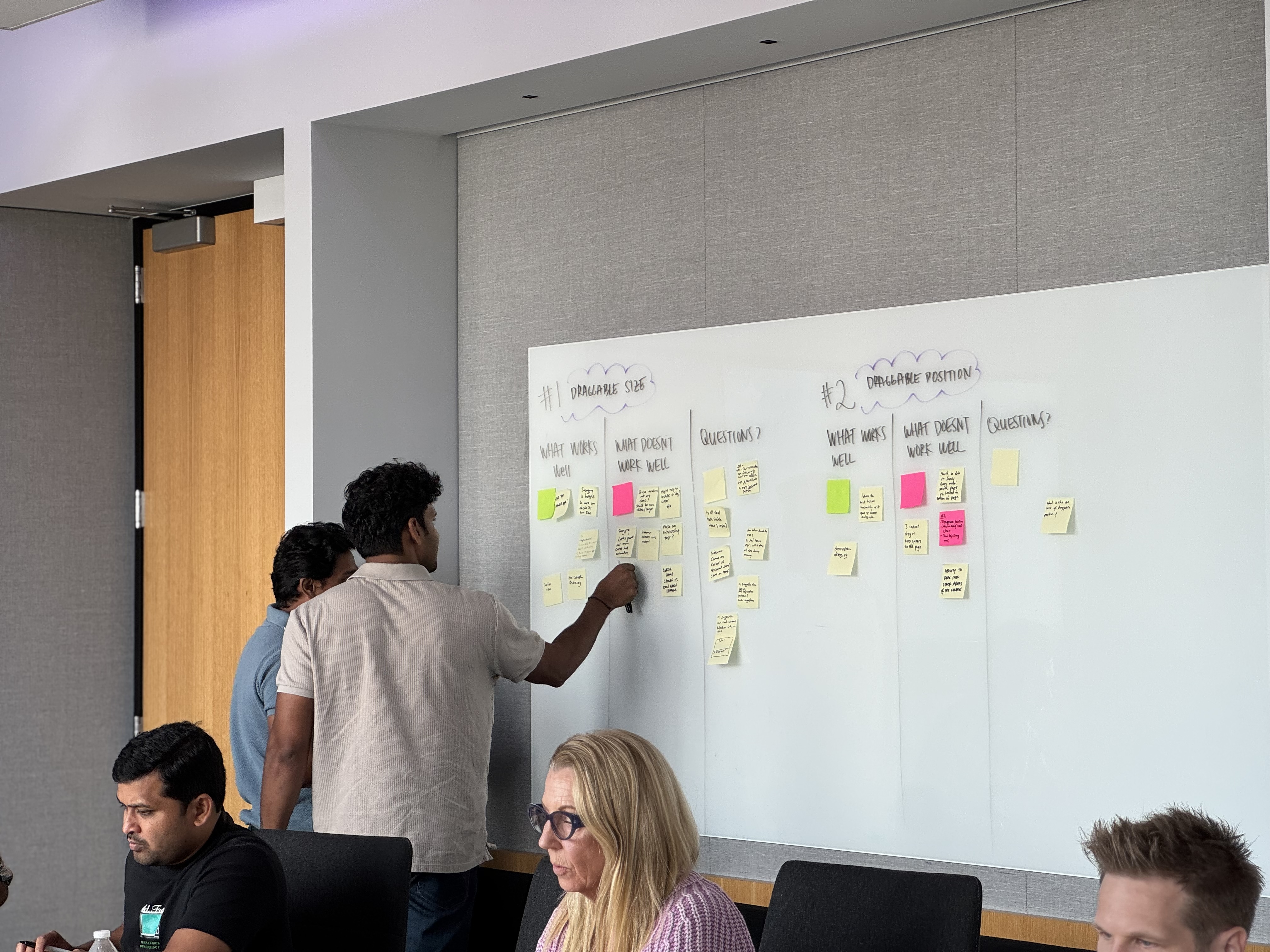
The PM workshop produced the prioritized list that became the December release. The bigger shift was vocabulary. New AI asks don't start from scratch anymore. They start from a framework the PM org helped build.
Decision 3: The recommendation vs. optimization argument.
On the deals team, I argued that optimization was the stronger agentic workflow to build first. The user research supported it. The pain point was real. Leadership went with recommendation instead. I didn't win that call.
But the argument itself changed something. The framework for how we decide what to build agentically — does user research support it? what's the actual pain point? is the chatbot the right shape for this task? — is now part of how the team debates those calls. The long-term outcome is still in motion. What's clear is that the question isn't getting skipped the way it was before.
What stuck
The test of strategic work isn't whether it ships. It's whether the next decision uses it.
in December
AI vocabulary
on 2026 roadmap